




Dom's Summary
When I visit a business, the small things in the packaging process often catch my attention. In this article, I look at why more packaging doesn’t always mean better protection, and how a fresh look at what you’re using could uncover opportunities to reduce waste and simplify how you pack.
When we talk to a business about its packaging, the conversation often starts with a specific problem. It might be rising costs, too much waste, damaged products or a packing process that’s taking longer than it should. But sometimes, when you take a step back and look at the whole process, a frequent question comes up: are you actually using more packaging than you need?
We see it all the time, a box gets chosen because it’s the closest size match available and then a little extra void fill gets added just to be safe. More tape goes around the outside because that’s how it’s always been done. Over time, those small decisions can become part of the everyday process without anyone really questioning them.
The packaging might be doing its job. The products are getting from A to B safely. But that doesn’t necessarily mean the process is as efficient as it could be.
More isn’t always better
When it comes to protecting a product, it’s understandable to think that adding more packaging is the safest option. But more packaging doesn’t automatically mean better protection.
We’ve seen products packed in boxes that are much larger than they need to be, with large amounts of protective material added simply to fill the empty space. The product gets there safely, but more material has been used, more space is needed to store the packaging, and the finished parcel is bigger than it needs to be.
We never recommend cutting corners, the aim should always be to make sure the product is properly protected using the right amount of packaging rather than simply adding more.
Take a look at what’s happening on the packing bench
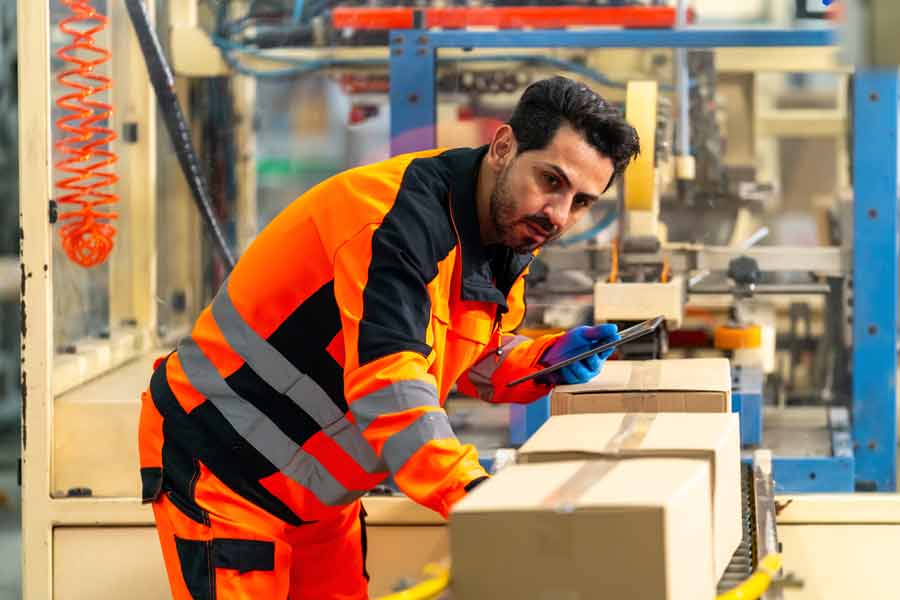
One of the most useful things we can do when visiting a customer is simply watch how products are being packed. Someone might be wrapping a product several times because they’re not confident the packaging they’re using is strong enough and another may be adding extra tape to keep it secure. Different members of the team might be packing the same product in slightly different ways and these can be signs that the packaging or process needs another look.
Has your packaging range grown without you noticing?
This is something we come across quite regularly. As new product is introduced, so is another box size. Or, a product changes slightly, but the old packaging stays on the shelf just in case. Before long, there can be dozens of different packaging products in use, some regularly, some occasionally and some hardly ever.
There’s nothing wrong with having a varied packaging range if every product has a purpose. But it’s worth reviewing whether you have products that are doing very similar jobs, or whether a smaller, more carefully selected range could work just as well.
The right packaging can make a difference in more places than one
Using less packaging isn’t just about reducing the amount of material you buy. A smaller or better-designed pack could mean less space is needed to store packaging. It could reduce the amount of void fill being used and make better use of the space available during transportation. It can also make life easier for the person packing the product. If a box fits properly and the protective packaging is right for the product, there can be less cutting, wrapping, taping and trying to make something work.
Don’t assume the cheapest packaging is costing you the least
A cheaper box might look like the best option when you’re comparing unit prices, but that only tells part of the story. If that box is too large, requires additional protective packaging and takes longer to pack, the overall cost could be much higher. The cheapest option to buy isn’t always the most cost-effective option to use, so looking at the detail matters,
Sometimes the answer is to use less. Sometimes it isn’t.
It’s important to say that reducing packaging isn’t always the right answer. Some products need significant protection. Some need specialist materials. Others need packaging that meets particular transport, handling or customer requirements.
The point isn’t to see how little packaging you can get away with using, but rather to make sure that what you’re using is doing a job. If every piece of packaging has a purpose and is helping protect the product, make the packing process easier or improve the way the product is transported, then it’s probably there for a reason.
So, how much packaging do you actually need?
There’s no simple answer because every business, product and operation is different. But it’s a useful question to ask.
When we carry out a Packaging Audit, we look at your full process, not with the aim of simply telling you to use less, but to understand how your packaging is working across the operation and whether there’s a better way of doing things.
Because sometimes, using less packaging can make a real difference. And sometimes, the biggest opportunity is simply making sure you’re using the right packaging in the first place.